

MARTYN'S LAW
Helping you prepare your premises for Martyn's Law
The Terrorism (Protection of Premises) Act 2025 introduces requirements for certain publicly accessible premises and qualifying events. Where your preparations identify a need for physical or technical security measures, MPS helps put the appropriate solution in place.
UNDERSTANDING THE TIERS
Standard tier and enhanced tier
Martyn's Law takes a tiered approach based principally on the number of people it is reasonable to expect may be present at the same time.
Status checked 2 October 2026: The Act is expected to come into force in spring 2027. The Security Industry Authority will confirm the exact date. Check the latest official guidance.
STANDARD TIER · 200–799 PEOPLE
Public protection procedures
For most qualifying premises where 200 to 799 people, including staff, may reasonably be expected to be present at the same time, from time to time. The focus is on appropriate public protection procedures, so far as reasonably practicable.
ENHANCED TIER · 800+ PEOPLE
Procedures plus additional measures
For larger qualifying premises where 800 or more people, including staff, may reasonably be expected to be present at the same time, from time to time. Qualifying events are also subject to enhanced-tier requirements.
Specific criteria, exceptions and special provisions apply. Use official ProtectUK and Home Office guidance to determine scope and applicable requirements.
PUBLIC PROTECTION PROCEDURES
Supporting the four public protection procedures
Where your arrangements identify a requirement for technology or infrastructure, MPS provides and integrates appropriate solutions to support the four public protection procedures.
EVACUATION
Alerting and communication supporting safe movement away from an affected area.
INVACUATION
Systems supporting instructions and movement to safer areas within the premises.
LOCKDOWN
Access control, alerting and integrated measures supporting established lockdown procedures.
COMMUNICATION
PA, audible and visual alerting and messaging for communicating clear instructions.
WHERE MPS FITS IN
From requirement to implementation
MPS helps translate identified security requirements into practical physical and technical measures, adapting existing infrastructure or introducing additional systems where appropriate.
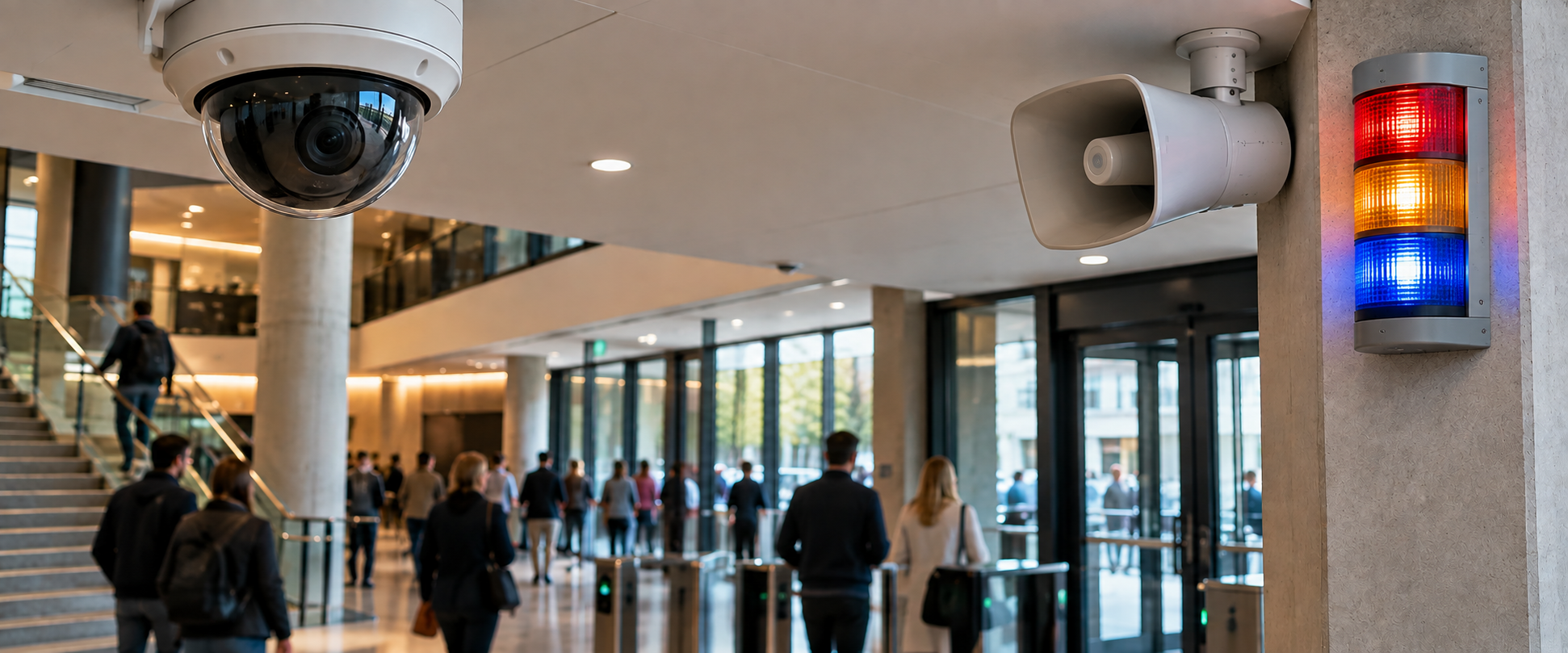
CCTV & Video Surveillance
Supporting situational awareness and assessment before, during and after an incident.
Access Control
Supporting controlled access, movement and established lockdown arrangements.
Alerting & Communication
Audible and visual alerts, PA and messaging to communicate clear instructions.
Remote Monitoring
Connecting appropriate systems with the MPS Alarm Receiving Centre to support detection, verification, escalation and response.
ENHANCED TIER
Supporting additional public protection measures
Enhanced-tier premises and qualifying events have additional requirements concerning monitoring, movement of people, physical safety and security, and security of information.
Where these requirements identify a need for security technology, MPS designs and integrates appropriate measures around the environment and its existing arrangements.
OFFICIAL MARTYN'S LAW GUIDANCE
Find out what applies to your premises or event
ProtectUK provides official information and resources covering scope, Standard Tier, Enhanced Tier, responsibilities and preparation. Organisations should use the official guidance to establish the legal requirements that apply to them.
Identified a security requirement?
MPS helps you put the appropriate physical or technical security measures in place.
0800 626 102